By Karen van der Poll
How do we conquer fear? Nelson Mandela expresses it so well: “THE BRAVE MAN IS NOT HE WHO FEELS AFRAID, BUT HE WHO CONQUERS THAT FEAR”
This is a quote by Madiba that I not only continuously encourage myself with, but also prompts the one question I often ask as a coach to initiate the greatest mind shift in people in reaching their goals and subsequently growing towards their full potential:
“What is it that you are most afraid of?”
Most people need time to think about this idea of being afraid. Some even want to dismiss the thought of fear, as they might not think that they are afraid of something. They’ve never contemplated that fear might be the reason they hold back in life or even avoid situations altogether. This fascinates me as I believe we all might define fear differently. However – it remains a question that brings thoughts and emotions to light, uncovers limiting beliefs, clarifies the reason for conscious or unconscious stress and anxiety and highlights some of the reasons behind procrastination. It is also a question that I often have to ask myself when I realise that I am avoiding something or struggling to move forward in areas of my life, even as someone who prefers to concentrate on the positive. The truth is, we can get by in life without facing anything – but if we want to grow in our internal and external world – we have to face what we are afraid of and what makes us feel uncomfortable.
Over the years I have come to the conclusion that all of us experience fear at some point. Some people are left crippled by their fears, whilst others thrive in spite of it. Again Mandela said: “I learned that courage was not the absence of fear, but the triumph over it” The words “I learned” particularly stood out to me this time as it implied that he wrote this about his experiences throughout his life. Even great men have had to deal with fear in order to achieve their greatness.
Tools to Conquer Fear
To understand something is the key to obtaining and mastering the tools to conquer it. As fear, that unpleasant emotion caused by the threat of danger, pain or harm, seems to pop up in so many conversations, I decided to understand it for myself. I came across a book written by Susan Jeffers: ‘Feel the fear and do it anyway’ in which I found great benefit in her thoughts of understanding and overcoming fear, as well as tools and techniques to conquer fear and live life to the full.
Jeffers believes that inability to overcome fear is not a psychological problem, but an educational one. With this knowledge you will treat fear as a fact of life rather than a barrier to success. Many treat fear as an obstacle, but the truth is that fear will surface whenever we take a risk or try something new. The issue is not the fear itself, but instead, how we handle that fear.
Understanding Fear
First, it is important to understand that everyone is afraid, and it is normal. Second, acknowledging fear makes you feel more relaxed. Jeffers helps to make sense of fear by breaking it down in 3 levels of fear and 5 facts about fear:
3 Levels of Fear
Level 1 Fear: ‘Surface Stories’
These fears are external. You think you are afraid of something. It could be passive (those things that just happen) like fear of dying, ageing, retirement, natural disasters, loss of financial security, war, illness or losing a loved one. Or it could be active like public speaking, changing career, losing weight, being interviewed, making a mistake, making friends, going to the doctor, or ending a relationship. We feel uncomfortable or try to avoid it, but often these fears spill over into other areas of our lives.
Level 2: ‘Generalised Fears’
These fears involve your inner state of mind rather than external situations. It is a feeling you get from imagining that you are not going to succeed. This can be helplessness, disapproval, rejection, failure, loss of image, being vulnerable or even success. It reflects your sense of self and your ability to handle this world.
Level 3: ‘The Ultimate fear’
This involves the fear where you think ‘I can’t handle it’. But what it really means is ‘I can’t handle what would happen after I don’t succeed’. This is really the core of every fear. Most people do not get to it because they shut down at level 1 or 2. You can see that it is the underlying fear of everything if you turn it around and ask yourself: ‘What do I have to fear if I can handle anything?’ The answer is nothing! So to diminish fear, you have to develop trust in your own capabilities. You shift your dominant thoughts from ‘I can’t handle it’ to ‘I can handle anything’.
5 Truths About Fear
- So long as you are growing and trying something new, you will feel fear. There is no point in trying to avoid it.
- The only way to remove a fear is to keep doing what you fear to do. Only then will your comfort zone expand and will you be able to become an improved version of yourself. When you face the unknown and learn to handle it, you will learn to do it better each time and gradually lose your fear of doing it.
- The only way to feel better about yourself is to go out and do what you fear. The more you do so, the more you realise you can handle anything life throws at you. You become more liberated and confident to live life to the full.
- Not only are you afraid when facing the unknown, so is everyone else.
- Pushing through fear is less frightening than living with the bigger underlying fear that comes from a feeling of helplessness. The sense of relief is overwhelming when helplessness subsides.
Overcoming your Fears
The big question then is: How can you move from ‘I can’t handle it’ to ‘I will handle it’ so you can move ahead in spite of your fears? In her book Jeffers covers a wide range of strategies and tools to help you move forward.
These can be organised into 6 broad areas to conquer fear.
Moving from pain to power
Learn to move from a position of pain, be it helplessness, depression or paralysis – to one of power that is choice, energy and action. She suggests looking into the power of affirmations and the choice of vocabulary, as your words have a tremendous impact on the quality of your life. Also, expand your comfort zone by doing something each day that challenges you.
Taking Responsibility
Learn to recognise the choices and power you do have and avoid falling into a victim mindset. You may not be in control of what happens in your life, but you are responsible for your reactions. Jeffers, in her book outlines definitions and exercises of how to master taking responsibility.
Practise Positive Thinking
Manage your frame of mind which determines how you feel and act and ultimately shapes your reality and outcome. It is reported that more than 90% of what we worry about never happens. So is it realistic to worry? Setbacks are painful and a positive attitude does not mean you deny the pain. But whether you handle it with a positive or negative attitude, decides the nature of your future.
Handling Changes to your Relationships
As you grow and become more positive, those closest to you may feel uncomfortable and react negatively to the new you. After all it now involves change for others and they are were comfortable with your old patterns. Jeffers provides tools to deal with these too. It is however amazingly empowering to have support from strong, motivated and inspirational people in your life.
Making No-Lose Decisions
Most of us are afraid or spend a long time making decisions trying to figure out which options are right or wrong. We were taught to be careful to make a wrong decision. We also yearn to be perfect and forget that we can learn through our mistakes. All we have to do to change the world is to change the way we think about it – then making a wrong decision is impossibility. You recognise that if things don’t work out as expected, you have gained experience, made new contacts but most of all – you were able to handle it. A critical factor however with this no-lose model is the way you think about outcomes and opportunities. Traditionally, opportunities in life are thought of as relating to money, status and visible signs of success. But security is not having things; it is in handling things! If you can approach life with a no –lose guarantee, fear will disappear.
Living a Whole Life
People can easily devote their entire lives to someone or something. It could be a career, children or a spouse. They then feel devastated when they lose what they consider to be their whole live. Jeffers suggests in her whole life matrix nine elements for a balanced life: contribution, hobby, leisure, family, alone time, personal growth, work, relationships and friends. With so many components in our life that we pay attention to, even if we lose one (however painful) there are many others to help fill the void.
(If this is a subject worth exploring more I can recommend this book by Susan Jeffers: ‘Feel the Fear and do it anyway’. It is packed with testimonies, clear explanations, ideas and tools on the topic.)

It takes courage to face our fears. But courage is not destined for the selected few. Courage lies within all of us if we dare to choose. Madiba had courage to fight and sacrifice for what he believed in but I see the courage daily in ordinary people who make extraordinary choices.
Everyday Courage
I see courage in the mum I met last week with a little boy who has a life-limiting illness, who daily chooses hope and normality despite her heartache and fear. I see courage in the student who did not get into his chosen course at university and despite the disappointment and rejection decides to apply again the next year determined to follow his dreams. The single mum, tired to make ends meet, yet shows up daily to provide for a future for her children. The world is full of very courageous people. Some, like Madiba, change the world and others just change their worlds – and both are equally important.
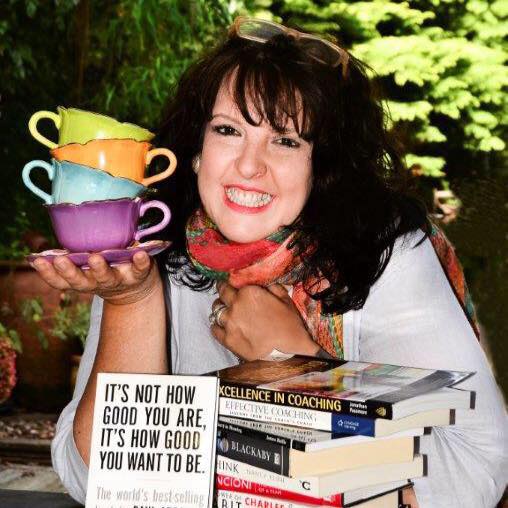
Karen van der Poll
Karen is a certified coach with an educational background in business psychology.
“I am an encourager of people, passionate about unlocking potential. Be authentically and unapologetically you…it is your super power! Seek your unique purpose; understand how valuable you are, concentrate on your talents and strengths and dare to live your passion…and you will change your world forever!!”
Karen coaches with an emphasis on developing emotional intelligence for everyone to become an influential leader and build exceptional relationships.
No responses yet