
By Janet Walton
Khanya Hospice means a lot to me. I trained as a nurse in Durban. When I moved back to Johannesburg I worked in palliative care. My very good friend Sue Van Rijsbergen continued to work in Durban. My husband and I moved to the UK in 2000. I was instantly drawn back to working with patients who have life limiting illnesses. We are now living in Somerset and I work in palliative care in the community. I wanted do something for a charity in South Africa.
My friend Sue came to visit us in the UK a few years ago. I had an opportunity to show her where I worked. I was immediately struck by how lucky we are in the UK. We have all the staff and facilities for patients living with a terminal diagnosis. We have palliative care teams, district nursing teams, social services and carers if needed. The patients have equipment and medication delivered to their house and the GP will visit when needed.

The situation in South African is very different
In KZN they are lucky to have a local hospice with a small community team of few registered nurses. They also have access to larger teams of healthcare assistants to often cover vast areas. There is no district nursing and no equipment. Sadly, there is also limited access to medication and doctors for home visits. Some hospices have in-patient units, but the vast majority of the work is done in the patients home. I decided then I would like to support a hospice in South Africa. When Sue returned home and started working at Khanya Hospice, I chose to support them.

The Hospice
Khanya Hospice is a small hospice. They provide palliative care in patients’ homes in the community living on the south coast of Kwa Zulu Natal. They cover a vast area of approximately 1500 miles(2500 kilometres). Here the staff work in very challenging situations. They have to visit terminally ill patients who have been sent home from hospitals. Unfortunately, often with inadequate or no medication to control their symptoms. It is a complicated area. Patients have complex diseases. Often the doctors they see are not comfortable using the medications needed to control many of their symptoms. But this is what the specialist palliative care staff are qualified to do.
Another concern is a lack of sanitation and running water. This makes it harder to support patients who are often bed bound and incontinent. The water has to be collected from a water point and carried to patients homes. Most of their patients live in small poorly constructed homes which are boiling in summer and freezing in winter.
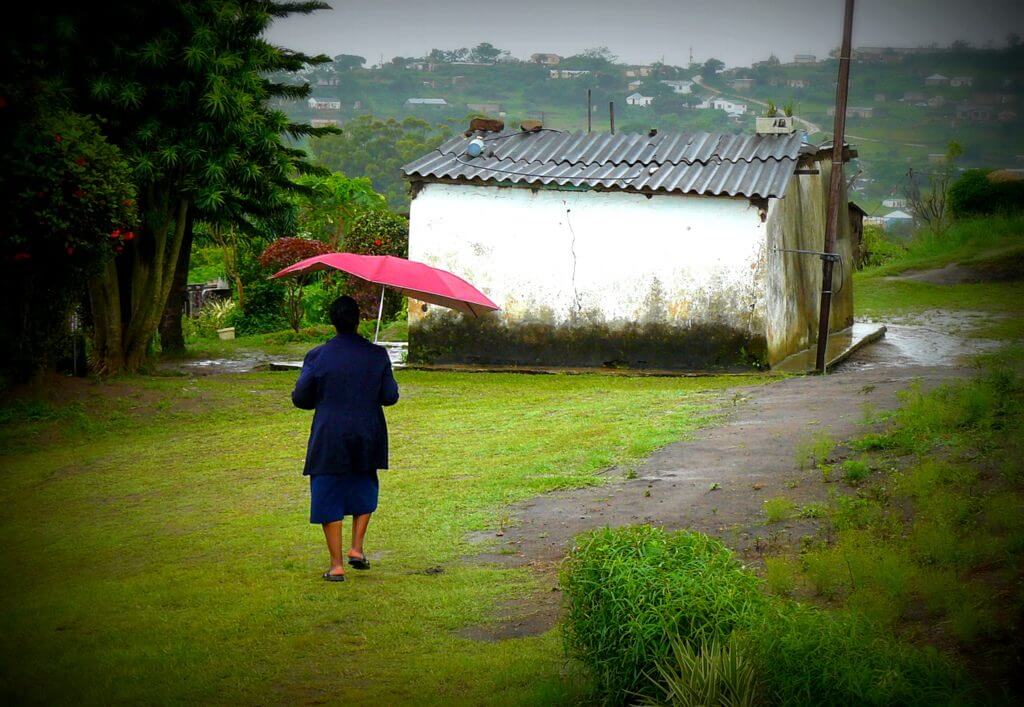
Although the area is beautiful the rolling hills present a challenge, the roads are dirt roads with little maintenance. They often wash away in rains, leaving large potholes or patches of deep mud making driving challenging and dangerous. At times they become so bad they cannot drive. The teams need to walk down slippery rock strewn paths to reach people who desperately need help. Plus they have to carry all their equipment.
Covid 19
The majority of the patients are from poverty stricken areas with poor or absent medical. Nursing facilities and the current COVID 19 crisis is just exacerbating an already difficult situation.
COVID has meant less staff at times with staff off sick or self isolating. It has also meant less access to medical services. And there is almost no access to larger hospitals as they deal with the influx of COVID patients. There is now a large backlog of patients waiting to be seen by specialist services. Thus late diagnosis of diseases mean sicker, more frail patients with advanced disease and complex symptoms.
COVID lockdown has also impacted the hospices fundraising efforts as their shops have closed. Many have struggled financially as they have lost their jobs. This means less money to support their local hospice. Unfortunately Khanya Hospice get no funding from the government so rely on the local community to support them.
Are you able to support?

Are you motivated to donate? Can you help make a change? Find us on GOFUNDME or emai donatekhanya@gmail.com

Janet Walton
You can read about Janet’s life in Frome, Somerset, UK in her article ‘Where We Live’
***Janet has also reviewed ‘Like Clockwork’ by South African author
Author Margie Orford***
2 Responses
[…] **Khanya Hospice is another wonderful charity in South Africa** […]
I salute you! Well done. All the best, will